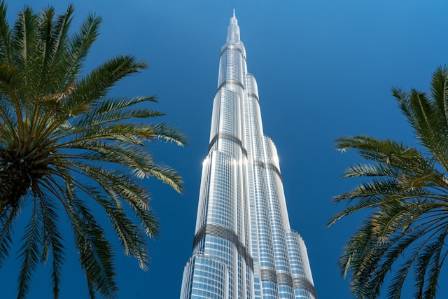
The Burj Khalifa stands today as an emblem of human ambition and technical prowess. Reaching 828 meters in Downtown Dubai, it held the title of the tallest building globally upon its completion in 2010. Crafted with a fusion of culturally inspired architecture, advanced structural systems, cutting-edge construction methods, and eco-smart systems, the tower redefined what was considered possible in vertical design and development.
Vision and Purpose
Originally known as “Burj Dubai,” the tower was conceived by Emaar Properties under the vision of positioning Dubai at the forefront of global cities. With leads like architect Adrian Smith and engineer Bill Baker from Skidmore, Owings & Merrill, the plan was not just to build a record-breaking skyscraper—but to create a lasting symbol of innovation and regional identity. Inspired by Islamic motifs and desert flora, the final structure elegantly marries cultural resonance with futuristic ambition.
Architectural Design
The tower’s distinctive Y-shaped floor plan grows organically out of the shape of a desert lily flower. The three-winged configuration encircling a hexagonal core not only creates sweeping views and efficient floor layouts, but also adds stability by dampening wind loads. The stepped setbacks that spiral upward enhance both aesthetics and aerodynamic performance.
Clad in a shimmering glass and aluminum façade, the exterior reflects sunlight while resisting Dubai’s punishing summer heat. The glazing and insulation choices reduce thermal gain and air-conditioning load, promoting energy efficiency.
Structural Engineering
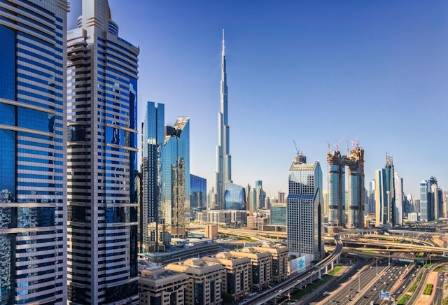
At the heart of the Burj Khalifa’s stability is the buttressed core system, developed by structural engineer Bill Baker. A reinforced hexagonal central core anchors three distinct buttresses in a Y configuration, channeling vertical and lateral forces directly into the deep foundation. This approach both simplifies load paths and minimizes material usage while delivering exceptional resistance to wind and seismic stress.
Construction Process
Construction began in January 2004 and concluded in early 2010. The foundation involved excavation and placement of a reinforced concrete raft and piles, extending nearly 80 meters into the ground. High-strength concrete was pumped at heights of over 600 meters—a world record—with about 330,000 m³ of concrete and 55,000 tons of steel rebar used throughout the build. At its peak, crews advanced structural levels at a pace of roughly 12 floors per week. The main contractor team included Samsung-C&T, BESIX, and Arabtec.
Sustainability Features
Designed with Dubai’s harsh climate in mind, the building incorporates various eco-conscious systems. Its façade uses high-performance glazing and thermal paneling to reduce cooling demand. Water usage is minimized via greywater recycling, rainwater harvesting, and efficient irrigation systems. LED lighting, energy-management controls, and passive shading all contribute to improved environmental performance.
Usage and Functionality
Rather than purely commercial space, the Burj Khalifa is a mixed-use vertical city, housing luxury residences, the Armani Hotel, high-end offices, observation decks, restaurants, and leisure amenities. Thirty-eight of its 163 levels are occupied by residential units, with others dedicated to hospitality and public spaces. Its high-speed elevators—57 in total—include express and local systems to efficiently transport occupants to different zones.
Challenges and Resolution
Building the world’s tallest structure came with numerous hurdles. Engineers tackled extreme wind loads through aerodynamic shaping and shape variation with height. Concrete pumping at unprecedented elevations posed logistical and safety challenges. Worker safety, harsh temperatures, and coordination among thousands of workers were handled with specialized planning and rigorous protocols. Complex elevator systems were introduced to manage vertical traffic efficiently.
Legacy and Global Impact
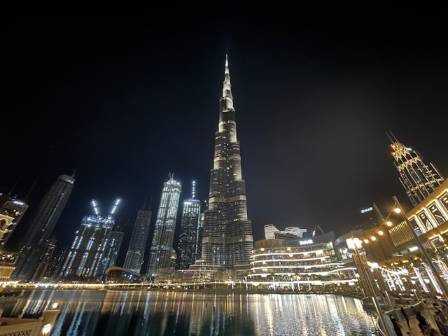
Since its opening in January 2010, the Burj Khalifa has broken multiple records: greatest height, most floors, highest observation decks, and highest vertical concrete pump. It has become a global icon of architectural ambition and engineering innovation. More than a building, it served as a catalyst for future supertall structures and inspired new approaches in skyscraper design and sustainability worldwide.