The solar system is comprised of eight primary planets: Mercury, Venus, Earth, Mars, Jupiter, Saturn, Uranus, and Neptune. These celestial bodies are generally classified into two distinct categories: the rocky Terrestrial Planets and the massive Gas Giants. Astronomers also use the term "Exoplanets" to describe worlds that revolve around stars outside of our own solar neighborhood.
Intriguing Insights into Individual Worlds
Each planet possesses unique features that distinguish it from its neighbors. For instance, the impact craters found on Mercury are named in honor of prominent figures in the arts, including writers and composers. Venus holds the title of the solar system's warmest planet, while Earth is unique for its protective atmosphere that filters out harmful radiation and incoming space debris. Mars has been the subject of more exploratory missions than any other world, reflecting our deep interest in the Red Planet.
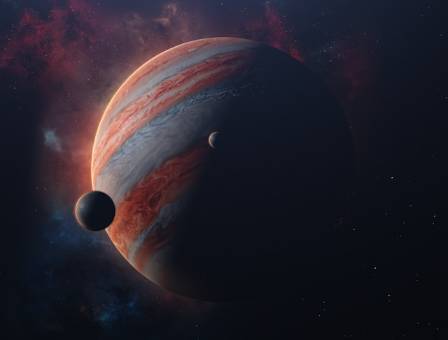
The outer solar system is dominated by giants. Jupiter is so massive that it outweighs all other planets combined by more than two-fold. Saturn is notable for having the most extensive collection of natural satellites, while Uranus remains largely mysterious, having been visited by only the Voyager 2 probe. Neptune is so distant that light from the Sun requires over four hours to reach its surface. Interestingly, while only eight planets are currently recognized, scientists have found persuasive evidence suggesting the existence of a ninth planet. Most of these worlds are visible from Earth without specialized equipment, though Uranus and Neptune typically require binoculars or a telescope.
Distribution of Mass and Nomenclature
Despite their prominence, the planets account for only 0.14% of the total mass within the solar system. The vast majority of this planetary mass—approximately 99%—is contained within the four gas giants. With the sole exception of Earth, every planet in our system is named after figures from Roman and Greek antiquity.
Planetary Sequence, Dimensions, and Orbital Cycles
The planets are organized by their proximity to the Sun, starting with Mercury and moving outward through Venus, Earth, Mars, Jupiter, Saturn, and Uranus, ending with Neptune. In terms of physical scale, Jupiter is the largest, followed by Saturn, Uranus, Neptune, Earth, Venus, and Mars, with Mercury being the smallest.
Orbital periods and distances vary significantly across the system. Mercury completes a journey around the Sun in just 88 days, whereas the distant Neptune takes nearly 165 Earth years to finish a single circuit. The physical span of these worlds also ranges from Mercury’s 4,879 km diameter to Jupiter’s staggering 139,822 km.
Defining the Criteria for Planethood
The status of a "planet" is determined by specific scientific standards established by the International Astronomical Union in 2006. To be officially recognized as a planet, a celestial body must orbit the Sun, possess enough mass to assume a nearly spherical shape through its own gravity, and have cleared its orbital path of other significant debris.
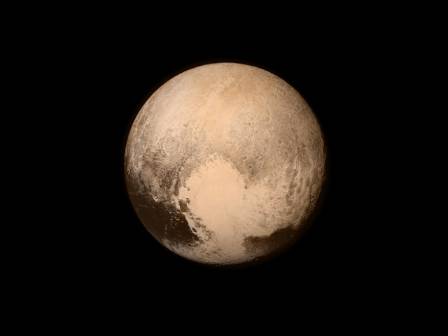
It is under these specific rules that Pluto was reclassified as a dwarf planet, as it has not yet cleared its neighborhood. Currently, there are five recognized dwarf planets, including Ceres, Pluto, Haumea, Makemake, and Eris. These definitions remain a topic of active discussion among planetary scientists and may be updated as our understanding of the universe evolves.