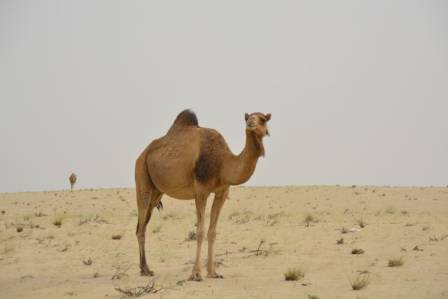
For over four millennia, humans have maintained a close partnership with camels, relying on them for survival in some of the world's most demanding environments. These resilient creatures are essential to communities globally, serving as vital companions and workers. Understanding their unique biological traits reveals why they are so perfectly adapted to life in arid regions.
Specialized Physical Adaptations
Camels possess several distinct features that allow them to endure harsh desert conditions. They are equipped with two layers of extensive eyelashes, which act as a shield to prevent sand from entering their eyes. Similarly, they have the ability to seal their nostrils entirely during intense sandstorms. Their mouths are also specialized; thick, hardy lips enable them to consume prickly and thorny vegetation that other herbivores find impossible to eat.
To manage the extreme heat of the desert floor, camels have developed reinforced pads of skin on their knees and chests. these "cushions" allow them to rest comfortably on scorching sand without suffering burns. Additionally, their physical diversity is noted by their humps: the Dromedary variety features a single hump, while the Bactrian camel possesses two.
Survival and Sustenance
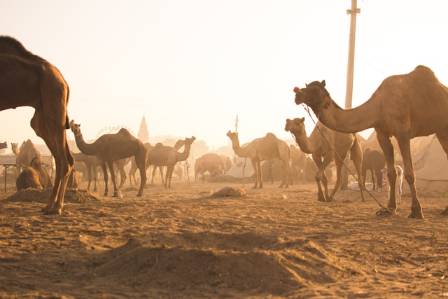
Contrary to popular belief, a camel's hump does not store water; instead, it holds up to 80 pounds of concentrated fat. This reservoir allows the animal to survive for weeks or even months without a steady food source. By centralizing fat in the hump, the camel can regulate its body temperature more effectively across the rest of its body. However, when water is available, camels are legendary drinkers, capable of consuming 40 gallons in a single session.
Growth and development in camels are also unique. Mothers endure a long gestation period of up to 14 months. Interestingly, some calves are born with pure white coats, which gradually transition to the standard brown shade as they reach adulthood.
Strength, Speed, and Cultural Impact
Despite their reputation as slow-moving pack animals, camels are remarkably athletic. They can maintain speeds of up to 40 miles per hour, making them as fast as many racehorses. Their strength is equally impressive; a healthy camel can transport loads weighing up to 900 pounds over distances of 25 miles in a single day. They also have unique social behaviors, such as spitting to startle or deter perceived enemies.
The deep historical connection between humans and these animals is reflected in language. In Arabic alone, there are more than 160 different terms used to describe camels, highlighting their immense cultural and practical value. Today, international efforts continue to ensure that these hardworking animals receive the medical care and compassionate treatment they deserve for their lifelong service to humanity.