Electric vehicles (EVs) in their various configurations offer a path toward enhanced fuel efficiency, decreased operational expenditures, and a smaller environmental footprint. Transitioning to electricity for transport needs bolsters public health, safeguards the ecosystem, improves passenger safety, and fosters a more resilient national infrastructure.
Energy Storage and Battery Longevity
Modern electric vehicle batteries are engineered for durability, though they do possess a finite functional life. Currently, many manufacturers provide coverage for these components lasting up to eight years or 100,000 miles. Research suggests that in temperate regions, these power cells can remain effective for 12 to 15 years, while extreme temperatures may reduce that window to between 8 and 12 years. Beyond climate, battery health is influenced by charging habits, driving styles, and the thermal management systems integrated into the vehicle. While out-of-warranty battery replacement represents a notable cost, market prices are projected to drop as manufacturing scales up and technology advances.
Financial Investment and Economic Incentives
The purchasing price of an electric model is often higher than that of a traditional combustion-engine counterpart, even though the ongoing energy costs are typically lower. This price gap is expected to vanish as mass production increases and battery manufacturing matures. Prospective owners can mitigate high upfront costs through long-term fuel savings and various financial incentives provided by state governments or local utility companies. These programs are designed to make the transition more accessible to the general public.
Efficiency and Performance Metrics
The high efficiency of electric drive systems allows for a significant reduction in fuel-related expenses. Because these vehicles operate differently than traditional cars, their performance is often measured in Miles Per Gallon of gasoline equivalent (MPGe) or kilowatt-hours (kWh) per 100 miles. High-performing light-duty electric models can achieve ratings surpassing 130 MPGe. Even hybrid models, which combine electric and combustion power, show marked improvements; for instance, a hybrid variant of a popular sedan may achieve 50 MPG compared to the 35 MPG seen in the standard gasoline version.
Charging Infrastructure and Grid Access
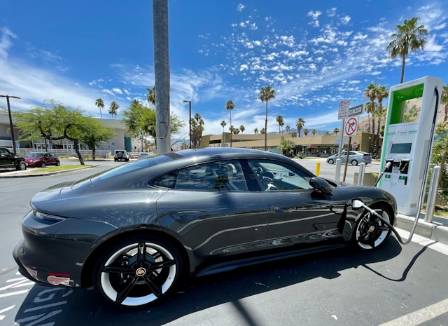
One of the primary benefits of electric propulsion is the ability to refuel at any location with grid access, such as a home, apartment complex, or office. Plug-in hybrids offer additional versatility by utilizing liquid fuels when electricity is unavailable. While public charging networks are not yet as dense as traditional gas station networks, they are expanding rapidly through cooperation between government agencies and private industry. As of 2024, the United States features over 60,000 public charging locations, providing more than 162,000 individual connection points for drivers on the move.
National Energy Stability and Environmental Impact
The transportation industry is a major consumer of energy and petroleum in the United States. Shifting toward hybrid and fully electric fleets helps diversify energy sources and supports the domestic economy. Electricity is generated from a varied mix of resources, including solar, wind, hydro, natural gas, and nuclear power, which increases the security of the energy supply during fuel shortages or natural disasters. Furthermore, technologies like regenerative braking—which captures energy during deceleration—allow these vehicles to maximize every unit of power, further reducing the nation's reliance on imported fossil fuels.