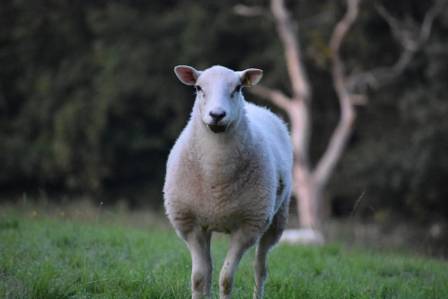
They are one of the oldest and most widespread domesticated animals on the planet, yet sheep remain shrouded in misconception. Often dismissed as simple-minded followers, these creatures possess a hidden world of intelligence, complex social bonds, and emotional depth that is only beginning to be understood. Beyond the pastoral idyll lies a species whose true nature is far more fascinating than the stereotypes suggest.
Masters of Social Perception
Contrary to the belief that sheep are blank-faced animals, they are astute readers of social cues. Scientific studies have revealed their remarkable ability to recognize and remember the faces of dozens of their flockmates. Even more impressively, they can perceive emotions on another sheep’s face, demonstrating a clear preference for calm and happy expressions over those of stress or fear. This social intelligence extends to humans, as they can learn to identify familiar and unfamiliar human faces, even from photographs.
A Panoramic View of the World
A sheep’s vision is a masterclass in evolutionary adaptation for survival. Their eyes are set on the sides of their head, granting them a panoramic field of view of nearly 320 degrees. This allows them to scan almost their entire surroundings for predators without having to move their heads. While this comes at the cost of limited depth perception, their exceptional peripheral vision is a primary defense mechanism, making them far less oblivious to their environment than they are often portrayed.
The Unbreakable Mother-Lamb Bond
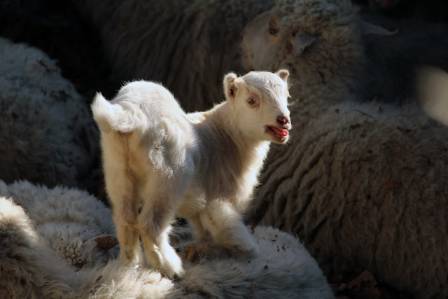
The bond between a ewe and her lamb is profound and is established instantly through sound. Within hours of birth, a mother and her offspring can recognize the unique sound of each other’s calls amidst the cacophony of the entire flock. This vocal imprinting ensures they can find each other for nursing and protection, forming a deep, communicative connection that is critical for the lamb’s survival and a testament to their emotional complexity.
A Matriarchal Society of Lifelong Friends
In their natural social structure, sheep live in sophisticated, matriarchal societies. Female sheep, or ewes, form tight-knit, lifelong bonds with their relatives and friends, creating stable family units. These groups are led by older, experienced females who remember the locations of food sources and safe grazing routes. Young lambs are raised not just by their mothers but within this extended, caring community, which provides protection and fosters social learning.
Protective Rams and Flock Dynamics
The role of the ram extends far beyond breeding. Male sheep exhibit strong protective instincts, often intervening to defend weaker or injured members of the flock from conflict or threat. This behavior, observed in sanctuary settings, points to a nuanced social structure where strength is used not for dominance alone but for the cohesion and safety of the group. It shatters the myth of the mindless herd, revealing a community built on mutual aid.
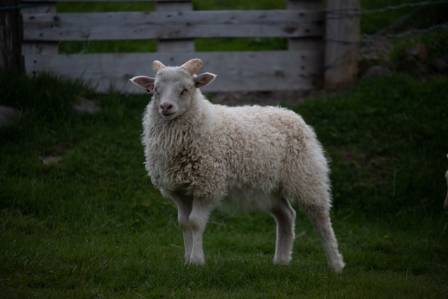
From their sophisticated social networks to their protective instincts, sheep are evidence that intelligence and emotional depth come in many forms. Their ability to form lifelong friendships, recognize complex emotions, and protect their own reveals a species worthy of our respect and compassion. To see a sheep clearly is to see a sensitive, intelligent being, challenging us to reconsider our relationship with all farmed animals.