Introduction
Computers are a huge part of our everyday lives. Today, they’re compact, affordable, and easy to carry around—but that wasn’t always the case. In the early days, a single computer could fill an entire room and was incredibly rare. This article walks through the incredible timeline of how computers evolved over thousands of years, driven by human curiosity and technological breakthroughs.
Abacus – The Ancient Counting Tool (around 2700 BC)
Long before modern computers existed, ancient civilizations used tools to help with math. The abacus, which first appeared in Mesopotamia, is considered one of the earliest forms of a computing device. It had rows of beads that moved on rods to help people perform basic calculations.
The First Generation – Powered by Vacuum Tubes (1940–1956)

The earliest modern computing machines appeared in the 1930s. One of the first programmable machines, called the Z1, was built by Konrad Zuse in 1936.
By the 1940s, large electronic systems like the ENIAC and EDVAC were developed. These early machines relied on vacuum tubes for data processing and used punched cards for input. They were massive and could only handle one task at a time. Programming was done using machine language—the most basic code a computer can understand.
The Second Generation – Rise of the Transistor (1956–1963)
The invention of the transistor in 1947 marked a turning point. These smaller, more efficient components replaced vacuum tubes, allowing computers to become faster, more compact, and more dependable.
Computers still used punched cards for interaction, but now programming became easier with the use of assembly languages, which used words instead of binary code. By the 1960s, some companies began offering personal-use machines, like the compact Programma 101, which looked like a typewriter but had computing power.
The Third Generation – Integrated Circuits Take Over (1964–1971)
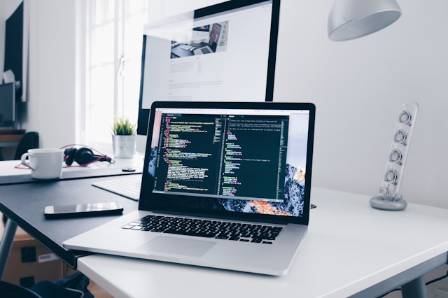
Instead of using multiple transistors, engineers began creating integrated circuits (ICs)—tiny chips that could hold thousands of components. These made computers more powerful, reliable, and efficient.
During this period, the use of keyboards and mice replaced punch cards. One well-known development was the Xerox Alto, a computer that featured a screen, keyboard, and mouse. This design later influenced many other computers.
The Fourth Generation – The Microprocessor Revolution (1972–2010)
In 1971, Intel introduced the 4004 microprocessor, which brought the central processing unit (CPU) onto a single chip. This breakthrough allowed for the creation of personal computers.
In the 1980s, machines like the Macintosh and IBM PC became popular. These computers came with software, operating systems, and graphical interfaces that made them more user-friendly. The iMac G3, launched in 1998, became famous for its colorful, transparent case and sleek design. It marked the beginning of a new approach to home computing—fun, creative, and personal.
Two major developments further advanced computers during this time:
-
The World Wide Web (1991): Made it easier for people everywhere to use the internet and access information.
-
Mobile Devices (2000s onward): Smartphones and tablets made computing mobile and accessible on the go.
The Fifth Generation – Intelligence in Machines (2010–Present)

We are now in the era of intelligent machines, where computers can learn, adapt, and even interact with humans. Technologies like voice assistants and AI tools (such as conversational bots) are common examples.
New techniques, like parallel processing and superconducting materials, have enabled powerful performance. In the future, advancements like quantum computing and molecular-scale processors may change everything again.
In 2019, a quantum computer developed by researchers reportedly solved a problem in minutes that would take traditional machines thousands of years—showing just how much potential this new era holds.
Today, the sleek tablets and touchscreens we use are just the latest form of computers—compact, intuitive, and incredibly powerful, all without a traditional mouse or keyboard.
Conclusion
From beads on rods to intelligent digital assistants, the computer has come a long way. With each generation, new discoveries and ideas brought us closer to the incredible machines we use today. And with AI and quantum computing on the horizon, the future looks even more fascinating.
If you're curious about technology, this is just the beginning of a much bigger adventure!