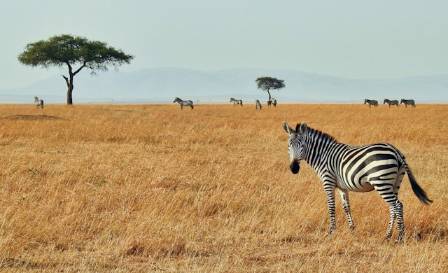
The Grévy's zebra is a striking and unique member of the equine family. While many are familiar with their iconic stripes, there is much more to these animals than meets the eye. From their historical royal namesake to their remarkable physical capabilities, understanding these creatures is vital to supporting their continued existence in the wild.
Conservation Status and Population Trends
The Grévy's zebra is currently classified as an endangered species. Historically found across broader regions of East Africa, they are now primarily confined to Ethiopia and northern Kenya. Since the 1980s, their population has experienced a drastic decline of approximately 64%. In the 1980s, the population was estimated at 5,800 individuals; today, that number has plummeted to roughly 2,100. This severe decrease is attributed to several critical factors, including the loss of natural habitats, intense competition for resources with other grazing animals, and illegal hunting for their skins.
Historical Significance and Naming
This specific species was named in honor of Jules Grévy, a former President of France. In 1882, the King of Abyssinia (modern-day Ethiopia) presented a zebra to Grévy as a diplomatic gift. This event led to the species being scientifically designated as Equus grevyi. Among the three extant species of zebra, the Grévy's is the largest, possessing a more mule-like appearance with large, rounded ears and narrower stripes compared to the plains zebra.
Remarkable Physical Traits and Speed
Zebras are surprisingly fast, capable of reaching speeds up to 65 kilometers per hour (approximately 40 miles per hour). This speed is a primary defense mechanism against predators. Additionally, their black-and-white patterns are entirely unique to each individual, functioning much like a human fingerprint. While foals are born with reddish-brown stripes, these markings darken to black as they mature.
The Strategy of the Stripe
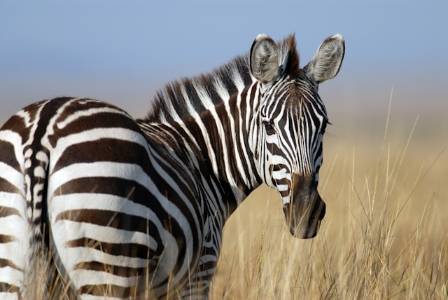
The purpose of zebra stripes has long been a subject of scientific study. It is widely believed that the patterns serve as a form of "motion dazzle" camouflage. Because major predators like lions are colorblind, a large, moving herd of striped zebras creates a confusing visual field of black and white. This makes it difficult for a predator to distinguish a single target from the rest of the group.
Early Development and Survival Instincts
Nature has equipped zebras with the ability to become mobile almost immediately after birth. A newborn foal can typically stand just six minutes after being born. Within 20 minutes, the foal is able to walk, and in under an hour, it can run alongside the herd. This rapid development is essential for survival in environments where predators are a constant threat.
Diet and Biological Adaptations
As herbivores, Grévy's zebras subsist mainly on grass, though they will supplement their diet with bark, leaves, and fruit. They spend approximately 60% of their day grazing. Notably, this species is highly adapted to arid environments and requires significantly less water than other zebra species. Their digestive systems are remarkably efficient, allowing them to extract sufficient nutrition from low-quality vegetation that other grazers might find inadequate.
Family Ties and Social Structure
Zebras belong to the Equidae family, making them close relatives of horses and donkeys. Despite this relationship, they have never been truly domesticated for riding or labor due to their smaller stature and much more aggressive temperament. Socially, they live in family units. While a group of zebras is commonly called a herd, it is also poetically referred to as a "dazzle."
Unique Sleeping Patterns
To remain safe from predators, zebras have the ability to sleep while standing up. This is possible due to specialized locking joints in their legs that prevent them from falling over while unconscious. This "standby" mode allows for an immediate escape if danger is detected. However, like humans and other mammals, they must occasionally lie down to achieve the restorative benefits of deep, REM sleep.